

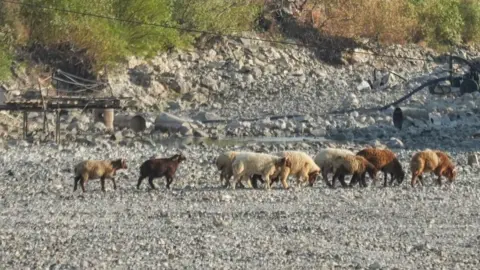
Near Seqalbia by the city of Hama, wheat fields ought to be lush and abundant with harvest.
Instead, a local farmer's plot lies barren, producing just a portion of its usual yield.
"This year was devastating because of the drought," stated the 46-year-old grower.
His land yielded just 190kg per unit—far below the expected quantity achieved in a normal year.
"{We did not recoup what we put in; we've suffered financially. It's impossible to afford next season's crops," he continued.
Having two teenage children to provide for, now he's borrowing funds from kin to get by.
National Emergency
The struggle is seen across the nation, where the worst rain shortage in 36 years has cut crop yields by nearly half.
An estimated deficit of 2.73 million tonnes is expected this year—equivalent to the annual dietary needs of more than 16.25 million Syrians.

Increasing Food Insecurity
Lacking additional food aid or the means to purchase grains, the situation may worsen dramatically.
More than 14,000,000 residents—around the majority of the public—already find it hard to meet their nutritional needs.
Out of these, millions face acute hunger, including a significant number in critical states.
Precipitation has dropped by almost seventy percent, devastating the majority of non-irrigated agricultural land.
"This means the difference between families remaining in their homes or being forced to migrate," commented an expert.
Everyday Challenges
Farming households are selling herds to supplement lost incomes, limiting their food intake.
Hunger-related issues levels among young ones and women are rising.
Grain is a staple commodity in Syria, the main ingredient in loaves and pasta—affordable items that are now increasing in value.
For Sanaa Mahamid aged 39, affording staples has become increasingly difficult.
With six children, she relies on her sons' salaries, which fall short of essential expenses.
"At times we need to get funds just to afford food," she explained.
Last year, a package of flatbread was priced at 500 local currency, but today it is four thousand five hundred.
To feed her household, she requires multiple units a daily—an expense of 9,000 pounds, excluding other items.
Government and Foreign Response
The emergency presents a serious obstacle for the administration, which is striving to restore the country after a long period of unrest.
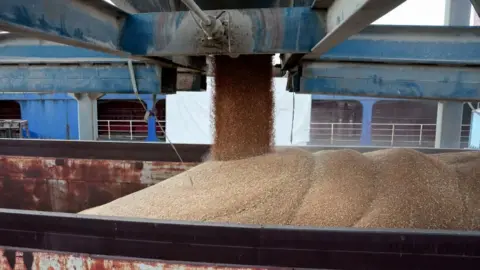
Assistance agencies are offering bread subsidies for those most vulnerable, but experts note that these are temporary fixes.
"We're trying to enable agricultural workers in the agricultural industry," commented a program director.
Direct support have been given to agricultural families who experienced the whole crops.
But, after years of conflict, Syria's agricultural industry was already damaged by economic crisis, damaged water systems, and unusable land.
Water Shortage
Within key agricultural areas, crop fields need multiple irrigation sessions per season, but because of absence of precipitation, many cultivators are unable to keep up.
"The agricultural worker's primary concern is securing resources," stated a area agriculture director.
Water depends on fuel, and costs have increased dramatically, costing eleven thousand to 12,000 currency per litre.
Expensive fuel costs and ongoing power cuts have rendered water pumps inaccessible for many growers.
Long-Term Solutions
One focus for the government is developing irrigation systems—including renewable energy irrigation systems—to make resources more available.
Yet such initiatives take years and funding—luxuries that agricultural workers lack currently.
So, for countless Syrians around the country, there is only one option to rely on in the next months: pray for rain.
